


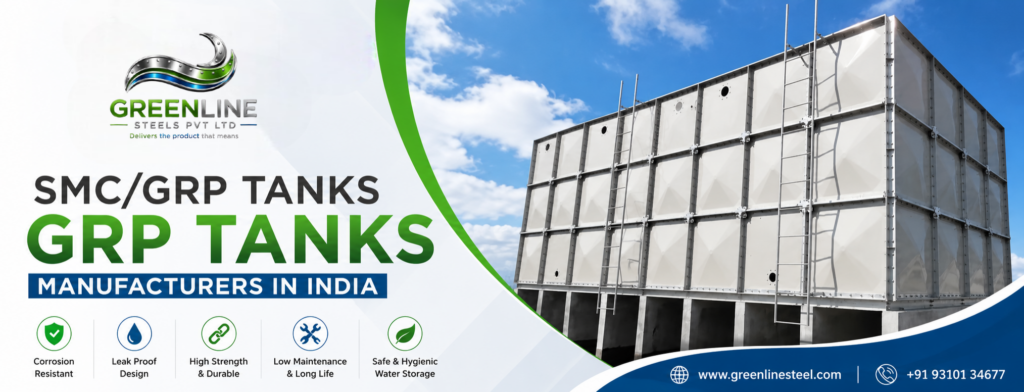
An SMC/GRP water tank quotation should do more than show a price per litre. For a commercial, industrial, institutional, municipal or fire-water project, the quotation becomes an important technical and commercial document. It should tell the buyer exactly what is being supplied, how the tank will be configured, which components are included, what the manufacturer will execute, and what remains the buyer’s responsibility.
This is particularly important when comparing SMC/GRP Tanks GRP Tanks manufacturers in India. Two quotations can show similar capacities while differing significantly in panel specifications, steel support, accessories, installation, transportation, testing and warranty terms.
A properly prepared project quote should therefore be detailed enough for the purchaser, consultant and contractor to compare proposals on an equivalent basis.
1. Project and Client Details
The quotation should begin with clear project information. This establishes exactly what the offer relates to and avoids confusion when a manufacturer is handling several requirements for the same client.
The quotation should identify:
| Particular | What should be stated |
| Client name | Legal name of purchaser |
| Project name | Building, plant, infrastructure or development |
| Project location | City, state and site location |
| Application | Potable, fire, process, raw or other water |
| Required capacity | Net and/or nominal capacity |
| Installation location | Ground level, basement, rooftop or elevated structure |
| Quotation date | Date of commercial offer |
| Validity | Period for which the quoted rates remain valid |
| Reference number | Manufacturer’s quotation or enquiry number |
For larger projects, the manufacturer should also refer to the client’s enquiry, tender specification or consultant’s drawing wherever applicable.
2. Tank Capacity and Dimensions
Capacity is one of the first items a purchaser checks, but capacity alone is not enough.
The quotation should state the proposed tank dimensions, including length, width and height. It should also clarify whether the stated capacity is nominal or usable capacity.
For example, a project may require a 100 KL tank, but the final configuration could depend on available space, tank height, freeboard and internal arrangement.
Greenline Steels’ SMC/GRP tank range is stated on its product page as 1 KL to 1000 KL+, with customised sizes available according to project requirements.
The quotation should ideally include a dimensional schedule such as:
| Parameter | Example quotation entry |
| Capacity | 100 KL |
| Length | As per approved design |
| Width | As per approved design |
| Overall height | As per approved design |
| Water depth | As per design |
| Freeboard | As specified |
| Tank configuration | Sectional modular |
| Installation | Ground/Rooftop/Elevated |
The actual dimensions should always be established from the project requirement rather than copied from a standard configuration.
3. SMC/GRP Panel Specifications
The panel specification is one of the most important technical sections of the quotation.
A manufacturer should clearly state:
- Panel material
- SMC or GRP construction
- Panel thickness
- Panel dimensions
- Glass fibre reinforcement
- Resin system where relevant
- Surface finish
- UV stabilisation, where applicable
- Mechanical properties
- Water absorption requirements
- Applicable standards and test requirements
Panel thickness should not be presented as a single generic number without considering tank dimensions and hydrostatic loading. Panel requirements can vary according to the height and configuration of the tank.
Published manufacturer specifications, for example, show that panel thickness can vary across tank configurations and may be selected according to tank height.
This is why buyers should ask for the actual panel schedule proposed for their tank rather than comparing quotations only on the basis of total capacity.
4. Applicable Standards and Compliance
A serious project quotation should identify the standards against which the tank is being offered.
The quotation should state:
- Applicable Indian Standards
- International standards, if specified
- Material compliance
- Testing requirements
- Quality inspection requirements
- Certification available with the supply
- Any project-specific consultant requirements
For example, some Indian tender documents specify SMC/GRP panel tanks by capacity and include structural steelwork, pipework and installation-related requirements in the project scope.
Where a quotation claims compliance with a particular standard, the buyer should ask the manufacturer to identify the exact standard, applicable section and scope of compliance. A generic statement such as “international quality” does not provide the same technical clarity.
5. Internal Liner and Sealing System
The quotation should describe the sealing arrangement because the watertightness of a sectional tank depends heavily on the quality and installation of the jointing system.
It should specify:
- Gasket or sealing material
- Gasket thickness, where applicable
- Joint sealing method
- Sealant specification
- Bolt arrangement
- Fastener material
- Treatment of panel joints
Manufacturer documentation for sectional tanks commonly identifies sealing gaskets, bolts, nuts and washers as integral parts of the panel assembly.
For potable water applications, the quotation should also clearly identify whether the materials in contact with stored water meet the required hygiene or potable-water requirements.
6. Structural Support and Foundation Requirements
A tank quotation should make it clear whether the structural support system is included.
Depending on the installation, the project may require:
- RCC foundation
- Steel base frame
- C-channel or structural steel support
- Internal reinforcement
- External stiffeners
- Rooftop staging
- Elevated structural support
The quotation should specify which of these are included in the manufacturer’s scope and which must be provided by the client or civil contractor.
This distinction can have a substantial impact on the final project cost.
For example:
Tank supply price ≠ complete installed project price
A low tank-only quotation may become more expensive once foundation, structural steel, transportation, erection and accessories are added.
7. Accessories and Fittings
A professional quotation should provide an accessory schedule rather than simply stating “standard accessories included”.
The schedule may cover:
- Inlet connection
- Outlet connection
- Overflow connection
- Drain connection
- Scour arrangement
- Flanges
- Manhole
- Vent
- Internal ladder
- External ladder
- Level indicator
- Roof access
- Inspection openings
- Valves, if included
- Pipe supports, if included
Each item should ideally include size, material and quantity where the project design has already established these requirements.
This prevents an important accessory from becoming a variation later.
8. Installation Scope
Installation must be explicitly defined.
The quotation should state whether the manufacturer’s price includes:
- Supply only
- Supply and transportation
- Supply and installation
- Supply, installation and testing
- Complete turnkey execution
For installation, the quotation should clarify whether it includes:
- Panel assembly
- Steel framework assembly
- Gasket installation
- Bolting
- Reinforcement
- Accessories
- Sealing
- Water testing
- Site supervision
The installation process for sectional tanks generally involves preparing and levelling the base, assembling panels, fitting sealing material, fastening the panels, installing reinforcement and completing testing.
9. Transportation and Logistics
For sectional SMC/GRP tanks, transportation is an important commercial consideration because the tank is assembled at the project site from panels and associated components.
The quotation should specify:
- Packing method
- Transportation charges
- Freight responsibility
- Delivery location
- Unloading responsibility
- Crane or lifting requirements
- Storage requirements at site
- Expected delivery schedule
The buyer should not assume that “delivery included” means unloading or movement of material to the installation area is included.
For large projects, the quotation should also state whether delivery will be made in a single consignment or multiple lots.
10. Site Requirements
A good manufacturer should identify the site conditions required before installation.
These may include:
- Level RCC foundation
- Foundation dimensions
- Required load-bearing capacity
- Access for material movement
- Working space around the tank
- Electrical requirements, where applicable
- Crane or lifting equipment
- Safe storage area
- Drainage arrangements
This section is especially important for rooftop and elevated installations.
A manufacturer should not assume responsibility for a civil foundation or structural system unless it is specifically included in the scope.
11. Testing and Inspection
The quotation should explain how the completed tank will be inspected and tested.
A project-specific inspection plan may include:
| Stage | Typical requirement |
| Material inspection | Verification of supplied materials |
| Panel inspection | Dimensions, finish and visible defects |
| Assembly inspection | Alignment and fastening |
| Joint inspection | Sealing and gasket installation |
| Structural inspection | Support and reinforcement |
| Water filling test | Checking for leakage |
| Final inspection | Completion against approved scope |
The exact testing procedure should follow the project specification and applicable requirements.
A quotation that says only “leak-proof tank” without explaining the inspection or testing process gives the purchaser little basis for evaluating the claim.
12. Quality Documentation
For institutional and industrial procurement, documentation can be as important as the physical product.
Depending on the project, the buyer may request:
- Product technical datasheet
- Material test certificates
- Quality inspection reports
- Test certificates
- Compliance certificates
- Installation manual
- Approved drawings
- Warranty certificate
- Operation and maintenance information
The quotation should state which documents are included with the supply and whether additional documentation is available on request.
13. Delivery Timeline
The manufacturer should provide a realistic delivery schedule.
Instead of simply writing “early delivery”, the quotation should specify:
Order confirmation → drawing approval → manufacturing → dispatch → site delivery → installation → testing
This provides the project team with a clearer basis for planning.
For customised tanks, manufacturing should normally be linked to approval of the final tank configuration and technical drawings.
14. Warranty and After-Sales Support
Warranty conditions should be written clearly rather than mentioned as a generic sales statement.
The quotation should identify:
- Warranty period
- Start date of warranty
- Manufacturing defects covered
- Leakage conditions covered
- Exclusions
- Installation-related exclusions
- Maintenance responsibilities
- Replacement or repair procedure
- Response process for warranty claims
The buyer should also check whether the warranty covers the tank panels only or the complete supplied system.
15. Commercial Terms
The commercial section should leave little room for interpretation.
It should include:
- Basic tank price
- GST
- Transportation
- Installation charges
- Structural steel charges
- Accessories
- Testing charges
- Loading/unloading
- Applicable taxes
- Payment terms
- Delivery terms
- Quotation validity
A useful quotation separates these components instead of presenting one unexplained lump-sum amount.
This approach allows procurement teams to compare total project cost, not simply the advertised tank price.
16. What Buyers Should Check Before Comparing Quotes
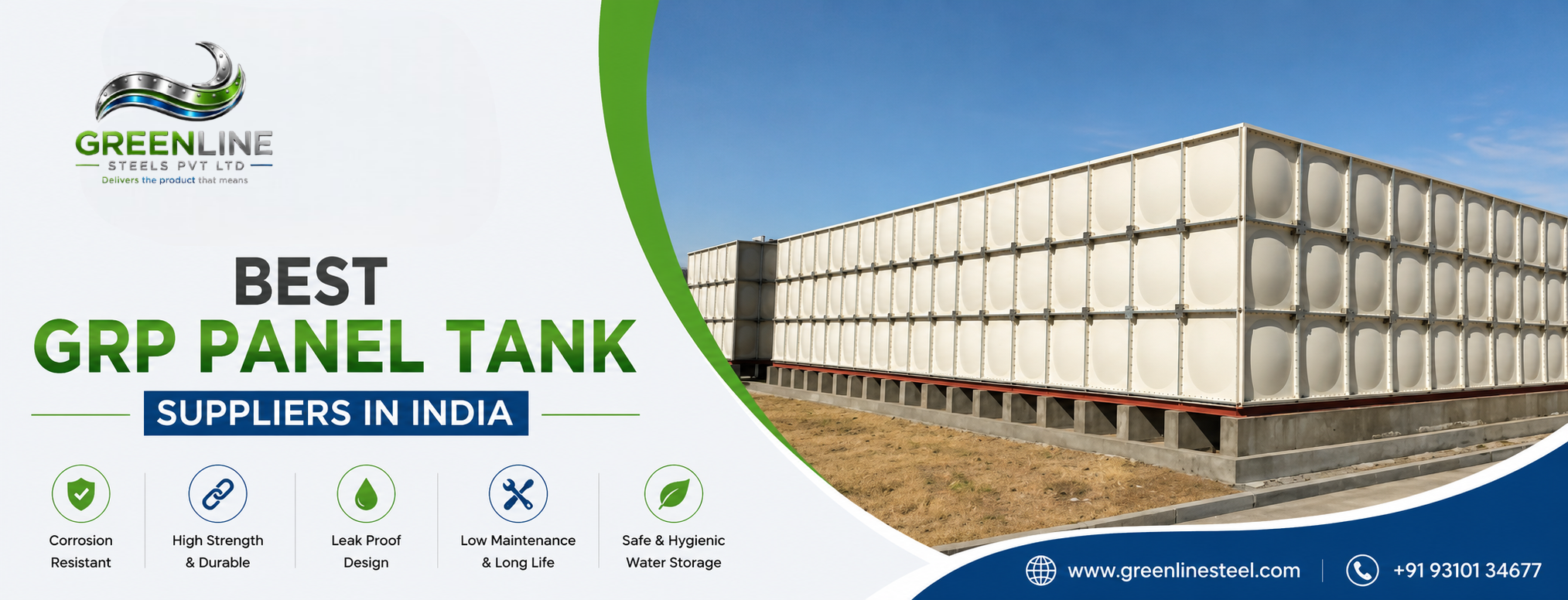
When reviewing quotations from Best GRP Panel Tank Suppliers in India or evaluating a Best SMC Panel Water Tank Manufacturer in India, use the same technical and commercial checklist for every supplier.
A practical comparison should cover:
- Capacity
- Dimensions
- Panel thickness
- Material composition
- Applicable standards
- Structural support
- Sealing system
- Accessories
- Installation
- Transportation
- Testing
- Documentation
- Warranty
- Delivery schedule
- Taxes
- Total project cost
A quotation that is cheaper at first glance may exclude several items that another manufacturer has included.
For example, one recent Indian tender for a 24,000-litre SMC/GRP panel tank separately identified structural steelwork and associated water-supply work in its bill of quantities. This illustrates why buyers should examine the complete scope instead of treating tank capacity and unit price as the only comparison points.
17. Questions to Ask the Manufacturer Before Placing the Order
Before issuing a purchase order, the project team should ask:
- What is the exact tank capacity and configuration?
- What panel thicknesses are proposed for the bottom, side and roof?
- Which standards apply to the proposed tank?
- What material is used for the gaskets and fasteners?
- Is the tank suitable for the intended water application?
- Is the steel support included?
- Is transportation included?
- Is installation included?
- Who provides the foundation?
- What testing will be conducted after installation?
- Which technical documents will be supplied?
- What exactly does the warranty cover?
- What is the expected delivery schedule?
- Which items are excluded from the quotation?
Getting written answers to these questions can prevent cost variations and scope disputes during execution.
Choosing an Industrial GRP Tank Manufacturer
For industrial projects, selecting an industrial grp water tank manufacturer in india should involve more than checking production capacity or obtaining the lowest quotation.
The manufacturer should be able to understand the project’s water-storage application, capacity requirements, installation conditions, structural considerations and documentation requirements. Technical support during specification and installation is particularly valuable for large commercial and industrial projects.
The buyer should also evaluate whether the manufacturer can customise tank dimensions and capacities, provide the required engineering information and coordinate effectively with consultants and contractors.
Why a Detailed Quote Matters
A detailed quotation protects both parties.
For the buyer, it provides a clear basis for technical comparison, budgeting and procurement approval. For the manufacturer, it establishes the agreed scope and reduces the possibility of disputes caused by assumptions.
The most useful quotation therefore answers five basic questions:
What is being supplied?
What are its technical specifications?
What is included in the project scope?
What does the buyer need to provide?
What is the complete project cost and delivery commitment?
If these points are clearly documented, procurement teams can compare manufacturers on value, engineering capability and project suitability rather than simply selecting the lowest quoted price.
SMC/GRP Water Tanks from Greenline Steels Pvt Ltd
At Greenline Steels Pvt Ltd, we provide SMC/GRP water storage solutions for residential, commercial, institutional, industrial, fire-water, water treatment and municipal applications. Our tanks are designed with modular reinforced panels and can be supplied in customised capacities according to project requirements. We support customers with engineering guidance, customised manufacturing, quality inspection and delivery coordination across India. Our approach is to understand the application and project requirements before finalising the tank configuration, helping clients receive a quotation that clearly defines capacity, specifications, scope and commercial terms.
Conclusion
An SMC/GRP water tank project quote should be treated as a technical and commercial document, not simply a price sheet. Capacity, panel specifications, standards, sealing, structural support, accessories, installation, transportation, testing, documentation, warranty and commercial terms all influence the actual value of the proposal.
For procurement teams, consultants and project contractors, the safest approach is to compare quotations line by line against the same technical scope. This makes differences between manufacturers visible and helps prevent unexpected costs during installation.
A detailed, transparent quotation gives the project team a much stronger basis for selecting the right SMC/GRP tank manufacturer for its application, site conditions and long-term water-storage requirements.