


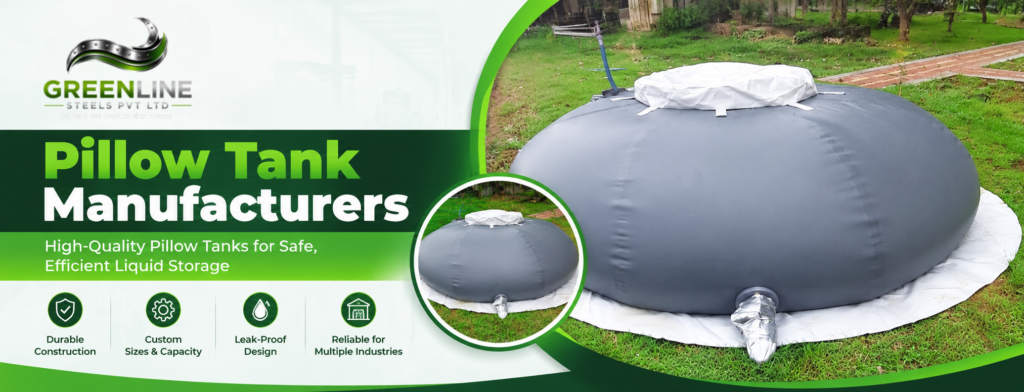
Flexible water storage systems are increasingly being considered for projects where installation speed, transportability and site flexibility matter. This is particularly relevant in India, where water infrastructure requirements vary widely across rural supply projects, construction sites, industrial facilities, agriculture, mining, emergency response and remote locations.
As of March 2026, the Jal Jeevan Mission reported that around 15.82 crore of India’s 19.36 crore rural households had tap water supply, representing 81.71% coverage. The programme is also focused on maintaining reliable and long-term water infrastructure.
For project teams evaluating Pillow Tank Manufacturers, tank capacity is only one part of the specification. The connection arrangement is equally important. Inlet, outlet, overflow and drainage connections determine how efficiently a tank can be filled, connected to pumps and pipelines, protected from overfilling and emptied for maintenance or relocation.
A pillow tank designed around the actual site requirements can integrate more effectively with an existing water management system. This is why connection design should be discussed with the manufacturer before procurement rather than treated as an accessory after the tank has been selected.
Why Custom Connections Matter in Pillow Tank Design
A pillow tank is a flexible storage vessel that expands as it fills and collapses when empty. Unlike rigid tanks, its connection points must accommodate changes in the tank’s shape and movement during filling and emptying.
This creates specific engineering considerations.
The connection arrangement should account for:
- Water source and filling method
- Pump capacity and operating conditions
- Pipeline diameter
- Required filling time
- Water discharge requirements
- Overflow management
- Drainage and cleaning
- Tank location and ground conditions
- Access for inspection and maintenance
- Whether the tank will remain in one location or be relocated
A standard connection may be sufficient for a straightforward application. Larger industrial, infrastructure or emergency projects may require multiple connections or different fitting arrangements.
Technical specifications from flexible tank manufacturers commonly provide different fitting materials and sizes, with options such as camlock, Storz and threaded connections. Some systems also provide dedicated cleaning ports, repair provisions and reinforced fitting locations.
The Four Main Connection Configurations
| Connection | Primary function | Key design consideration | Typical project requirement |
| Inlet | Introduces water into the tank | Flow rate, pipe size and fitting type | Water supply, tanker or pump filling |
| Outlet | Transfers stored water to the point of use | Pumping, pipeline and discharge arrangement | Irrigation, industrial or utility water |
| Overflow | Controls excess water during filling | Safe discharge route and elevation | Automated or high-volume filling |
| Drainage | Allows controlled emptying | Low-point positioning and access | Cleaning, maintenance and relocation |
The correct combination depends on the operating process rather than simply the tank volume.
1. Inlet Connections for Controlled Filling
The inlet connection is where water enters the pillow tank. Its size and configuration should correspond with the filling arrangement.
For example, a tank supplied through a pump may require a different connection arrangement from one filled using a tanker, gravity line or existing pipeline.
Before finalising the inlet, project teams should establish:
- Source of water
- Pump or pipeline size
- Expected filling flow rate
- Connection type
- Hose compatibility
- Location of the inlet
- Frequency of filling
- Requirement for more than one inlet
For larger projects, multiple inlet connections can be considered where the filling process needs to be distributed or where more than one supply line is available.
The fitting should also be reinforced appropriately because repeated connection and disconnection can place mechanical loads around the fitting area. Technical manufacturing guidance for pillow tanks highlights the importance of reinforcement at fitting locations.
This is one area where working directly with experienced Pillow Tank Manufacturers can help prevent compatibility problems during installation.
2. Outlet Connections for Water Distribution
The outlet transfers stored water from the tank to a downstream system. Depending on the application, water may flow towards an irrigation network, industrial process, temporary pipeline, firefighting system or distribution point.
The outlet specification should therefore consider:
- Required discharge volume
- Pipe diameter
- Pump connection
- Valve arrangement
- Hose type
- Fitting material
- Position of the outlet
- Frequency of discharge
The outlet location is particularly important. A project that requires complete emptying should have an arrangement that allows water to be removed efficiently rather than leaving a significant residual volume inside the tank.
For industrial projects, the outlet can also be integrated with existing pumping and distribution infrastructure. This reduces the need for site modifications after delivery.
Pillow Tank Manufacturers & Suppliers in india should therefore be evaluated not only on tank fabrication but also on their ability to configure connections around the client’s existing water system.
3. Overflow Connections for Safer Water Management
Overflow protection becomes important when a tank is filled automatically or when the filling process is not continuously supervised.
An overflow connection provides a controlled route for excess water if the tank reaches its designed full condition.
The overflow should be planned with attention to:
- Maximum tank fill level
- Expected inlet flow
- Overflow pipe diameter
- Discharge route
- Ground drainage
- Safe separation from structures
- Potential waterlogging
- Whether the overflow can operate by gravity
Technical guidance for pillow systems recommends that overflow arrangements have a free and suitable discharge path rather than directing water into an unsuitable sump or location where uncontrolled water accumulation can occur.
For large installations, the overflow route should be considered during site planning. Simply adding an overflow fitting without deciding where the discharged water will go can create a drainage problem around the storage area.
4. Drainage Connections for Complete Emptying
Drainage is particularly important when the tank must be cleaned, inspected, relocated or taken out of service.
A dedicated drainage arrangement can provide a controlled method for removing stored water. The drain should be positioned according to the tank design and site conditions so that water can be discharged without damaging the installation area.
Drainage planning should cover:
- Lowest practical discharge point
- Drain pipe size
- Valve arrangement
- Safe discharge location
- Cleaning requirements
- Access for maintenance
- Water disposal requirements
A well-designed drainage system is particularly useful for temporary installations. Once a project is completed, the tank may need to be emptied before folding, packing and transporting it to another location.
Connection Materials and Fitting Compatibility
Connection performance also depends on the fitting material and the compatibility between the fitting, hose and pipeline.
Flexible tank systems can be configured with different connection types and fitting materials depending on the intended application. Technical specifications in the industry include options such as aluminium, stainless steel and polypropylene fittings, along with camlock, Storz and threaded connections.
The correct selection should consider:
- Water characteristics
- Required connection frequency
- Pipeline material
- Pump arrangement
- Operating environment
- Corrosion exposure
- Required fitting strength
- Ease of disconnection
For industrial or remote projects, the connection arrangement should also consider the availability of replacement hoses, couplings and valves at the site.
How Connection Design Changes by Application
A pillow tank for irrigation does not necessarily require the same configuration as one used for emergency response or an industrial project.
| Application | Inlet requirement | Outlet requirement | Overflow consideration | Drainage priority |
| Agriculture | Pump or pipeline compatible | Irrigation pipeline | Useful for controlled filling | High |
| Construction | Rapid filling | Utility or site distribution | Important where automated filling is used | High |
| Mining | Heavy-duty supply connection | Process or utility network | Site-specific | High |
| Defence and remote camps | Portable filling arrangement | Distribution pipeline | Important for unattended operation | High |
| Fire protection | Rapid filling | High-access discharge arrangement | Important during replenishment | Medium to high |
| Industrial facilities | Existing pipeline integration | Process or utility connection | Usually engineered into system | High |
| Emergency response | Rapid deployment connection | Quick-access discharge | Important where filling is continuous | High |
This application-based approach is more useful than selecting a tank purely by nominal capacity.
Pillow Tanks vs Onion Tanks: Connection Requirements
Pillow tanks and onion tanks have different operating characteristics.
A pillow tank is enclosed and collapses when empty. This makes it useful where secure storage, compact transportation and a low storage footprint are important.
An onion tank has an open top and self-supporting sidewalls. It is useful when water needs to be accessed quickly, particularly in firefighting, emergency response and certain irrigation applications.
For this reason, onion water tank manufacturers in india and onion tank manufacturers in india may configure these systems differently from enclosed pillow tanks.
An onion tank may prioritise rapid filling, accessible water withdrawal and a suitable support structure, whereas a pillow tank may place greater emphasis on flexible pipeline connections and controlled filling and discharge.
Project teams should therefore specify the application before choosing the tank configuration.

What Procurement Teams Should Ask Pillow Tank Manufacturers
A technical RFQ should provide more information than the required storage capacity.
A useful procurement document can include:
- Required capacity
- Water type
- Application
- Installation location
- Expected operating environment
- Filling method
- Required inlet size
- Required outlet size
- Overflow requirement
- Drainage arrangement
- Preferred fitting type
- Hose and pipeline specifications
- Required accessories
- Delivery location
- Installation requirements
- Inspection and maintenance requirements
This approach allows the manufacturer to develop a configuration that fits the project instead of supplying a standard tank that later requires site modifications.
It is also important to clarify whether the manufacturer provides connection accessories, valves, repair kits and other components as part of the supply.
Why India Needs Application-Specific Flexible Storage
India’s water infrastructure requirements span very different operating conditions. According to PRS Legislative Research’s analysis of the 2026-27 Jal Shakti budget, around 75% of India’s districts are classified as water stressed or water scarce. The same analysis notes that irrigation accounted for about 90% of India’s water use as of 2022, compared with 7% for domestic purposes and the remainder for industrial use.
These conditions create demand for storage systems that can be adapted to different project environments.
Flexible tanks can be considered where permanent civil construction is not practical, where deployment needs to be fast, or where the storage system may need to be moved between locations.
For project engineers and procurement teams, this makes configuration as important as capacity.
Choosing a Manufacturer for Custom Pillow Tank Connections
The capability of the manufacturer matters when the project requires non-standard connections.
When evaluating a supplier, ask whether they can provide:
- Custom inlet and outlet configurations
- Different fitting sizes
- Reinforced connection areas
- Overflow arrangements
- Drainage connections
- Custom connection locations
- Compatible valves and accessories
- Repair provisions
- Technical guidance for installation
- Project-specific fabrication
This is particularly important for bladder water tank manufacturers in india, where terminology can vary across suppliers and applications. The procurement specification should focus on measurable technical requirements rather than relying only on product names.
Similarly, businesses searching for a Pillow anion tank manufacturer in India should confirm the exact tank type and connection requirements before requesting quotations, as “pillow” and “onion” tanks serve different operating configurations.
Why Greenline Steels Pvt Ltd for Custom Flexible Water Storage
At Greenline Steels Pvt Ltd, we understand that a flexible storage tank needs to work with the complete water management arrangement at the project site. Our Pillow and Onion Tanks are designed for applications across defence, construction, agriculture, industrial operations, emergency response and remote locations. We can discuss project-specific requirements such as storage capacity, inlet and outlet configurations, overflow arrangements, drainage systems, connection sizes, lifting points and other accessories. Our focus is to provide a practical configuration based on the intended application, site conditions and water distribution requirements. As a Flexible Pillow Tank Manufacturer in India, we work with customers to develop flexible storage solutions suited to their operational requirements.
Conclusion
Selecting a pillow tank should not stop at capacity and fabric specification. The inlet, outlet, overflow and drainage configuration can directly affect installation, filling, water distribution, maintenance and eventual relocation.
For procurement teams, the most useful approach is to define the complete operating requirement before placing an order. This includes the water source, flow rate, pipeline arrangement, discharge requirements, overflow route, drainage point and fitting compatibility.
Working with experienced Pillow Tank Manufacturers allows these requirements to be considered during fabrication rather than addressed after installation.
For projects involving temporary, industrial, emergency, defence or remote-site water storage, a properly configured flexible tank can provide a practical alternative where conventional storage infrastructure is difficult or time-consuming to deploy.